The Ultimate Guide: How to Reduce Customer Acquisition Cost for eCommerce Brands
 Updated: Apr 17, 2026 ⏱ 9 Min Read
If you are running an e-commerce retail brand, certain things might look like a massive success from the outside. Traffic is pouring in, ads are running at full speed, and clicks are happening constantly. Everything seems fine until you open your backend dashboard and realize the most crucial element is missing: Profit.
💡 Key Takeaways
- 1. What is Customer Acquisition Cost (CAC)?
- 2. What is a Good CAC for eCommerce?
- 3. Why is Your CAC Constantly Increasing?
- 4. How to Reduce Customer Acquisition Cost for Ecommerce Brands
This is where the frustration begins. Every abandoned cart equals lost money, and every weak landing page results in wasted ad spend. You are essentially paying for traffic that you are not converting into actual sales. Let that sink in. You are not losing money because advertising on platforms like Meta or Google is too expensive; you are losing money because your internal system is inefficient.
Need a High-Converting Strategy?
Our expert developers at PG Digital build systems that sell.
Understanding how to reduce customer acquisition cost for ecommerce brands is no longer an optional strategy—it is a mandatory survival skill. It is the exact difference between scaling your brand to the next level and shutting down your operations entirely.
1. What is Customer Acquisition Cost (CAC)?
Customer Acquisition Cost (CAC) is one of the most critical metrics in the eCommerce industry. Simply put, it is calculated as:
Total Marketing Spend ÷ Number of Customers Acquired = CAC
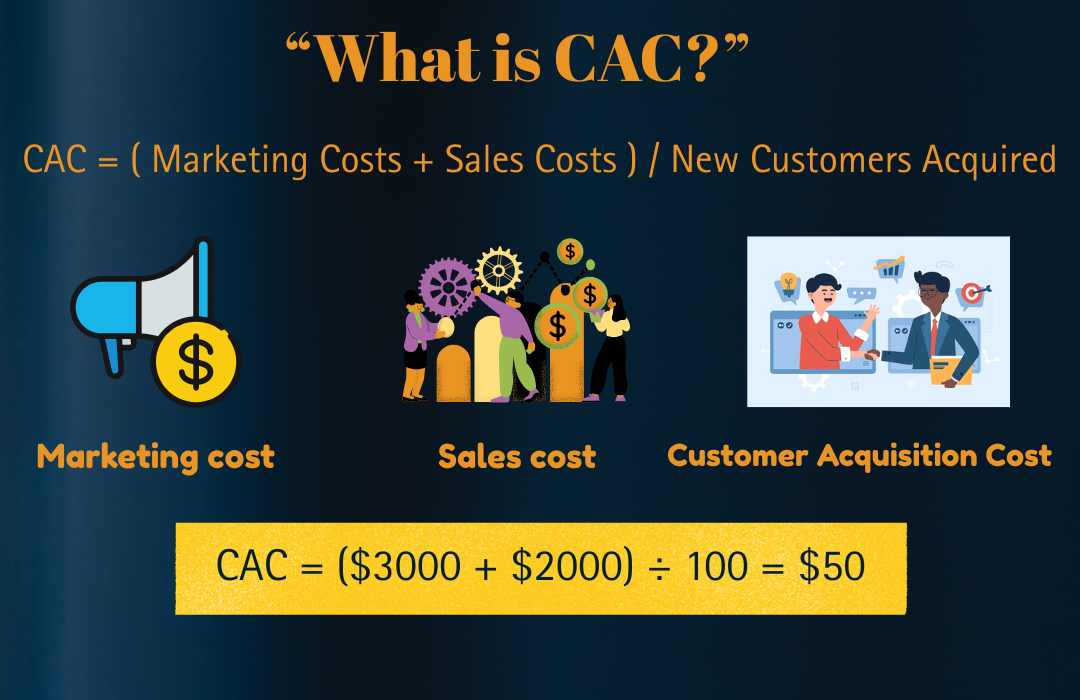
On paper, this formula looks incredibly simple. In reality, however, this single metric controls your entire profitability. Most eCommerce brands make one critical mistake: they constantly calculate their CAC, but they fail to control the underlying factors that affect it.
If your CAC is increasing month after month, it is not just a random number going up. It is a massive red flag signaling that your system is leaking money. You might be getting clicks, but if your conversion rate remains low, your acquisition cost will naturally skyrocket. A rising CAC is the ultimate symptom of a broken sales system.
2. What is a Good CAC for eCommerce?
To understand this, let’s simplify things with actual numbers. A universally accepted, healthy CAC for most eCommerce brands should be around 30% to 40% of your Average Order Value (AOV).
For example, if your AOV is ₹1,500, a healthy CAC would fall between ₹400 and ₹600.
However, here is the deeper, pro-level insight that many amateur marketers ignore: CAC alone does not decide your profit. Customer Lifetime Value (LTV) decides your true profitability. If a customer only buys from you once, your acquisition cost needs to be extremely low to make a profit. But if you have a system where a customer buys from you multiple times over a year, you can easily afford a higher initial CAC and still be highly profitable.
This is exactly why smart brands don’t just focus on frontend acquisition. They focus intensely on:
Customer Retention
Encouraging Repeat Purchases
Delivering an Unmatched Customer Experience
A higher LTV directly relieves the pressure on your CAC. Brands that build proper funnels, automated retention systems, and smooth backend journeys—much like the structured performance marketing approach used by PG Digital Solution—are the ones that dominate their niche in the long run.
3. Why is Your CAC Constantly Increasing?
When profits dip, the most common excuse business owners make is, “Ads expensive ho gaye hain” (Ads have become too expensive). But that is rarely the actual root of the problem.
The real reason is much simpler and often harder to accept: You have a remarkably low conversion rate.
Let’s break down the math. Imagine 100 people click on your ad and visit your website, but only 1 person makes a purchase. That means 99% of your hard-earned traffic bounced, and 99% of your ad spend delivered zero return on investment. (If you want to shift your focus to what actually matters, read our guide on ROI-driven marketing).
Ask yourself: Is this a traffic problem, or a system problem? The reality is that this is a conversion issue. Most brands attempt to fix this by blindly pouring more money into their ad budget. This only magnifies the problem because you are simply scaling an inefficient system.

4. How to Reduce Customer Acquisition Cost for Ecommerce Brands
Now, let’s move from theory to practical, actionable steps. Here are 8 proven ecommerce performance marketing strategies to lower cac that actually move the needle.
Strategy 1: Implement Conversion Rate Optimization (CRO)
This is your fastest and most reliable win. You don’t need more traffic; you need more sales from the traffic you already have. For instance, if you spend ₹10,000 to get a 1% conversion rate (1 sale), and you optimize your site to hit a 2% conversion rate, you instantly get 2 sales for the exact same ad spend. Your CAC is instantly cut in half. To achieve this, focus on crystal-clear product descriptions, strong value propositions, fast website loading speeds, and visible trust signals. High-converting UI/UX design is a core pillar of what we build at PG Digital Solution.
Strategy 2: Fix Funnel Leakage
Most eCommerce brands don’t lose money on the actual ad; they lose money immediately after the click. The journey from Ad → Click → Exit is where your CAC increases silently. Every single drop-off is paid loss. You must optimize your landing page clarity, ensure your offer is positioned irresistibly, and create a frictionless checkout process. (This checkout stability is a key factor we discuss in our Shopify vs WordPress comparison).
Strategy 3: Aggressive Retargeting
Cold traffic (people who have never heard of you) rarely converts on the first visit. Warm traffic converts significantly faster. Retargeting acts as your second chance. When a user visits, leaves, sees your ad again on Instagram, and then buys—you acquire the exact same user at a fraction of the original cost, delivering a much higher ROI.
Strategy 4: Marketing Automation
Relying on manual follow-ups is not scalable. Setting up robust email and SMS/WhatsApp automation runs 24/7. When a user visits a product but leaves, an automated system sends them a gentle reminder, bringing them back to complete the purchase.
Strategy 5: Deep Personalization
Generic storefronts suffer from poor conversion rates. Personalized shopping experiences build immediate trust. Implementing features like “Recommended for you” or “Frequently bought together” increases relevance. Relevance breeds trust, trust drives conversions, and higher conversions naturally pull your CAC down.
Strategy 6: Abandoned Cart Recovery
This is the lowest-hanging fruit in eCommerce. A user added a product to their cart, meaning they had high purchase intent, but they left due to price hesitation, a complex checkout, or a simple distraction. If you implement a system to recover just 15–20% of these abandoned carts, you instantly inject pure profit into your business.
Strategy 7: Leverage Affiliates & Creators (UGC)
Paid ads require significant upfront capital and often lack immediate credibility. On the other hand, User-Generated Content (UGC) and creator partnerships bring built-in trust. When a trusted creator recommends your product, customer hesitation drops dramatically. Proper social media marketing ensures these creator ads reach the right audience efficiently.
Strategy 8: Continuous A/B Testing
Never rely on guesswork. Small tweaks often yield massive financial returns. Consistently test your ad headlines, creative variations, and Call-to-Action (CTA) buttons. Even a steady 10–15% improvement month-over-month compounds into massive profitability over a year.
5. How to Improve ROAS on Meta Ads
If a high CAC is your primary problem, a high ROAS (Return on Ad Spend) is your ultimate solution. A better ROAS automatically translates to a lower acquisition cost.
To achieve this on platforms like Meta (Facebook/Instagram), you must shift your focus entirely to the creative. The first 3 seconds of your video ad are the most critical. Instead of just showing the product, use problem-first messaging.
For example, instead of a generic “Buy our knee brace now,” use a strong hook like, “Still struggling with sharp knee pain every morning?” Connect with the user’s problem emotionally, and then present your product as the undeniable solution. Aligning brilliant creatives with a frictionless backend funnel is the secret to scaling profitably, which is a core feature of our custom e-commerce solutions.
6. A Real-World Example of Optimization
Let’s look at what happens when these systems are applied correctly:
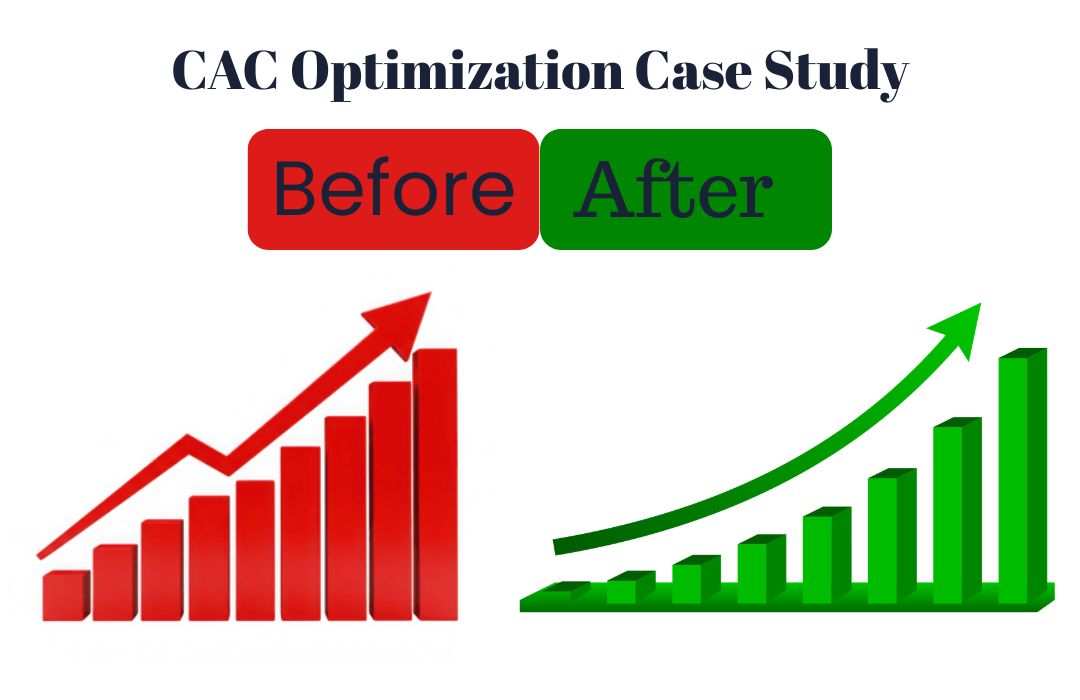
Before Optimization:
- Total Spend: ₹50,000
- Total Sales: 50
- CAC: ₹1,000
After Implementing CRO & Funnel Fixes:
- Total Spend: ₹50,000 (Same spend)
- Total Sales: 100
- CAC: ₹500
By simply improving the system, the brand received double the sales from the exact same traffic, effectively slicing their CAC in half.
7. The Final Framework for Success
o truly master how to reduce customer acquisition cost for ecommerce brands, you need to stop chasing cheap clicks and start building a robust ecosystem. Follow this proven framework:
- Improve your overall conversion rate (CRO).
- Identify and fix every leakage point in your sales funnel.
- Aggressively recover lost users via retargeting and automation.
- Increase your Average Order Value (AOV) using upsells and bundles.
- Continuously optimize ad creatives to push ROAS higher.
8. Frequently Asked Questions (FAQs)
Q1. What is a good CAC for an eCommerce business? A healthy CAC typically falls between 30% to 40% of your Average Order Value (AOV). However, if you have a high Customer Lifetime Value (LTV) with strong repeat purchases, you can comfortably afford a higher initial CAC.
Q2. How can I reduce my CAC quickly? The absolute fastest method is Conversion Rate Optimization (CRO). By improving website loading speeds, simplifying the checkout process, and utilizing strong retargeting campaigns, you can drastically lower your CAC without spending a single extra rupee on ads.
Q3. Why is my CAC suddenly increasing? An increasing CAC is usually the result of a dropping conversion rate, funnel drop-offs, ad fatigue, or a lack of backend retargeting. If people are clicking but not buying, you are paying for empty traffic. (If this is happening to you, read our guide onwhy your Shopify store is getting traffic but no sales).
Q4. What are the best ecommerce performance marketing strategies to lower CAC? The most effective strategies include A/B testing ad creatives, implementing abandoned cart SMS/Email sequences, leveraging user-generated content (UGC), and optimizing mobile landing pages for a frictionless user experience.
Conclusion: Stop Buying Traffic, Start Building Systems
At the end of the day, you don’t necessarily need more traffic. You need a much better system.
Traffic without conversion is just a business expense. Traffic with conversion is where the profit lies. While average brands obsess over tweaking ad budgets, top-tier brands obsess over optimizing their internal systems. That is the real shift in modern marketing—moving away from just spending more, to converting better.
So, before you decide to double your Meta or Google ad budget, ask yourself: Are you optimizing the traffic you already have, or are you just paying to leak money?
Traffic buys attention, but systems create profit. If your current digital marketing agency setup isn’t converting the way it should, it’s time to stop the bleeding. Contact PG Digital Solution today, and let’s start scaling your eCommerce brand with a performance marketing system that actually delivers results.