The Ultimate Guide: SEO vs Performance Marketing for Ecommerce Growth (2026)
 Updated: Apr 18, 2026 ⏱ 8 Min Read
Most ecommerce brands are constantly asking the wrong question: “Should we focus our budget on SEO or Paid Ads?”
💡 Key Takeaways
- What is SEO vs Performance Marketing?
- The Funnel-Based Strategy (How Both Channels Work Together)
- CAC vs LTV Comparison (With Real Benchmarks)
- The Testing vs Scaling Framework
If you are treating these two channels like competitors, you are already losing to brands that treat them like partners. The real question you should be asking is: How do we build a cohesive system where both work together to scale revenue predictably?
Need a High-Converting Strategy?
Our expert developers at PG Digital build systems that sell.
Here is the harsh reality of modern online business: Traffic without conversion is just wasted money, and running ads without a long-term organic strategy will eventually bleed your profit margins dry as ad costs rise. Understanding the true dynamic of SEO vs performance marketing for ecommerce growth is not about choosing a single winner—it is about building a complete, unstoppable growth engine.
What is SEO vs Performance Marketing?
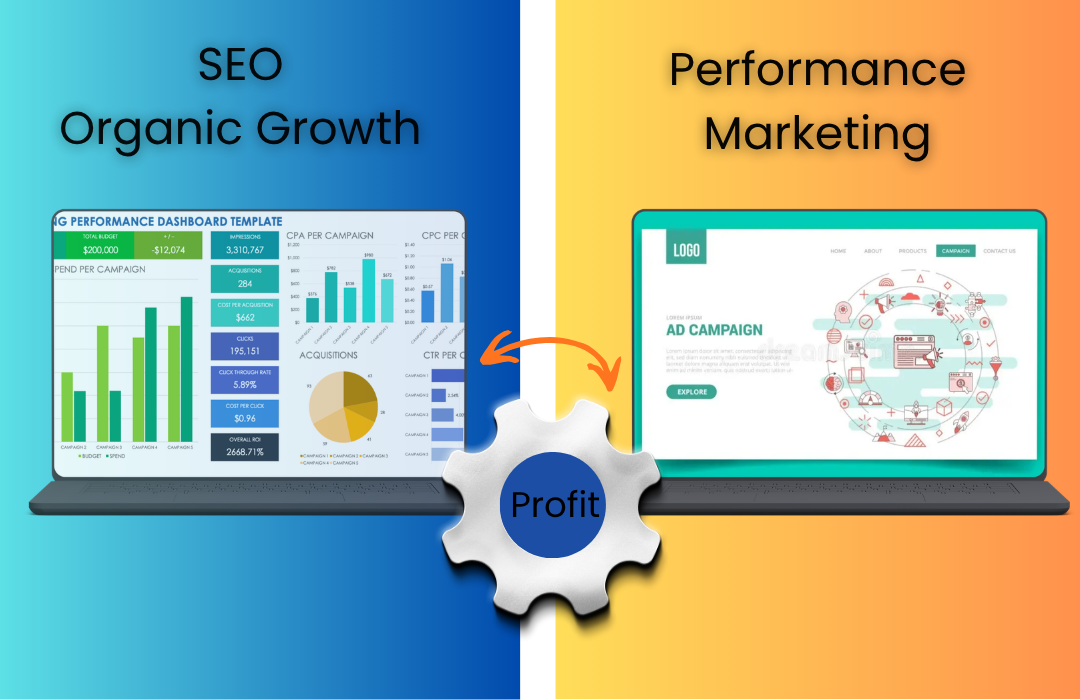
Before we merge them, we must understand their distinct roles in the digital ecosystem.
- Search Engine Optimization (SEO): This is the process of optimizing your website to rank organically on search engines like Google. It focuses on long-term, compounding traffic. Once established, this traffic is essentially “free.”
- Performance Marketing: This involves paid advertising channels (like Meta Ads, Google Ads, and TikTok Ads) where you pay for immediate impressions, clicks, or sales. It is focused on instant results, aggressive testing, and quick scaling.
The Core Difference:
Ads buy you immediate attention. SEO builds long-term authority. To win in e-commerce retail, you need both.
The Funnel-Based Strategy (How Both Channels Work Together)
Most amateur brand owners run SEO and Ads in separate silos. This is a massive mistake. A highly profitable ecommerce brand maps these channels directly to the customer journey funnel.
- Top & Mid Funnel (Awareness & Intent): This is where SEO dominates. Users are searching for solutions (e.g., “how to style a baggy t-shirt”). Your optimized blog posts and category pages capture this high-intent, early-stage traffic.
- Mid & Bottom Funnel (Conversion & Scaling): This is where Performance Marketing takes over. You run highly targeted retargeting ads to the users who read your SEO blog but didn’t buy, pushing them towards the final conversion.
The Perfect Example:
An SEO-optimized blog brings 1,000 targeted visitors for free → Your Meta Pixel captures their data → You run highly targeted dynamic ads offering a 10% discount → The conversion happens at a drastically lower cost.
CAC vs LTV Comparison (With Real Benchmarks)
When deciding where to allocate budget, you must look at Customer Acquisition Cost (CAC) and Customer Lifetime Value (LTV).
| Marketing Channel | Acquisition Speed | Initial CAC | Impact on LTV |
| Performance Marketing (Ads) | Instant | High | Medium |
| Ecommerce SEO | Slow | Low (Long-term) | High |
Real Industry Benchmarks:
- Good ROAS (Return on Ad Spend): 2x – 4x
- Average CAC on Ads: ₹300 – ₹1,500+ (depending on the niche)
- Healthy Conversion Rate: 2% – 4%
The Pro-Level Insight: Ads only become truly profitable when your ROAS is consistently above 2.5x. However, as your SEO scales over time, your blended CAC (overall cost to acquire a customer) drops significantly because organic traffic dilutes your paid ad expenses.
The Testing vs Scaling Framework
At PG Digital Solution, we use a specific growth logic for our clients: Ads are your testing engine; SEO is your scaling engine.
If you launch a new clothing line, you shouldn’t wait 6 months for SEO to tell you if the market likes it. You use Paid Ads to aggressively test creatives, messaging, and product-market fit. Once the ads prove that a specific product is a winner, you immediately build a robust SEO strategy around that product to capture long-term organic demand without paying per click.
The Time vs ROI Curve
How Long Does Ecommerce SEO Take to Show Results?
Unlike ads, SEO is an asset you build over time. If you are wondering how long does ecommerce seo take to show results, here is the realistic timeline according to Google Search Central guidelines:
- 30–60 Days: You will see initial traction, faster indexing, and minor ranking improvements.
- 3–6 Months: You will start seeing meaningful results and a steady flow of targeted organic traffic.
- 6–12 Months: This is where the compounding growth happens, turning your site into a dominant industry authority.
Insight: When you turn off your ad budget, your traffic instantly stops. When you stop working on SEO, your historical traffic continues to flow and grow.
When to Start Running Paid Ads for Ecommerce?
You should not run ads on day one if your foundation is broken. So, exactly when to start running paid ads for ecommerce?
You should only launch paid campaigns when:
- Your product-market fit is validated.
- Your website features flawless UI/UX design and loads in under 2 seconds.
- Your tracking (Meta Pixel, Conversions API, Google Analytics) is perfectly configured.
(If you are running ads but struggling to get sales, check out our guide onwhy your Shopify store is getting traffic but no sales).
Search Intent Mapping (The SEO Foundation)
If your SEO strategy is failing, you are likely ignoring Search Intent. Ads allow you to interrupt users; SEO requires you to answer their specific questions.
| User Intent | Keyword Example | Required Page Type |
| Informational | how to style an oversized t-shirt | Dedicated Blog Post |
| Commercial | best oversized t-shirt brands | Collection / Category Page |
| Transactional | buy black oversized t-shirt online | Optimized Product Page |
Matching search intent is critical. If someone searches to buy a t-shirt and you show them an informational blog, they will bounce instantly.
Content + Ads Integration (Execution Framework)
Here is how you integrate both strategies to create an infinite growth loop:
- Run Ads: Launch video creatives testing different angles (e.g., “Comfortable gym wear”).
- Identify Winners: The data shows the “comfort” angle is getting the cheapest clicks.
- Build Content: Our content writing team creates a deep, SEO-optimized blog titled “The Best Gym T-Shirts for Maximum Comfort.”
- Retargeting: We place a tracking pixel on that blog. Anyone who reads it but doesn’t buy is hit with a heavily discounted retargeting ad on Instagram.
The Ultimate Retargeting System (Step-by-Step)
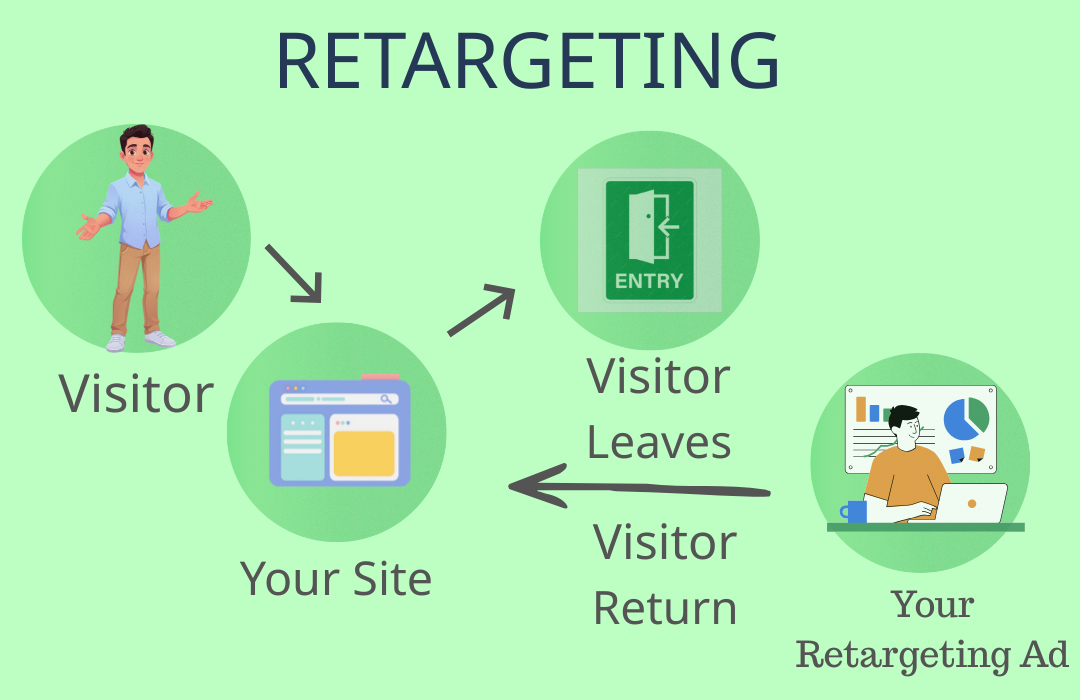
If you are paying for traffic, you must squeeze every drop of ROI out of it.
- The Setup: Ensure your Meta Pixel and Google Tag are flawlessly integrated into your Shopify development backend.
- Track Key Events: Accurately track View Content, Add to Cart, and Initiate Checkout.
- Create Audiences: Segment your audiences into ‘All Website Visitors’ and ‘Cart Abandoners’.
- Run the Campaigns: Launch aggressive reminder campaigns (e.g., “You left this in your cart!”) and offer-based campaigns to secure the sale.
The result? Drastically higher conversions and a significantly lower CAC.
Real Case Study: Scaling a D2C Brand
The Scenario: A mid-sized D2C brand came to us in their scaling phase.
The “Before”: They were spending ₹1.5 Lakh/month on ads, pulling a stagnant 1.8x ROAS. They had zero SEO traffic and were entirely reliant on Meta.
The PG Digital Solution Strategy:
- We created 20 high-intent SEO collection and product pages.
- We optimized their ad creatives based on the organic search data we uncovered.
- We implemented a ruthless backend retargeting system.
The Results (6 Months Later):
- ROAS Improved: 1.8x skyrocketed to a highly profitable 3.4x.
- Organic Traffic: Grew from 0 to 40,000 highly targeted visitors/month.
- CAC Reduction: The overall blended CAC was reduced by 32%.
The Key Insight: SEO and Ads are not enemies; together, they create a scalable, highly profitable growth system.
Frequently Asked Questions
Q1. Which is better for ecommerce: SEO or Paid Ads?
Both are absolutely essential. Performance marketing provides immediate results, cash flow, and testing data. SEO supports long-term, stable growth and protects your profit margins. The most successful ecommerce brands combine both effectively.
Q2. How long does ecommerce SEO take to show results?
SEO typically takes 3 to 6 months to start showing meaningful results and driving targeted traffic. This timeline heavily depends on your niche’s competition, the technical health of your site, and the quality of your execution.
Q3. When should I start running paid ads?
You should only start running ads when your product is validated, your website is heavily optimized for conversions, and your data tracking systems (Pixels/Tags) are perfectly set up to avoid wasting your budget.
Q4. Can I scale an ecommerce business without running ads?
Yes, but your growth will be incredibly slow. Relying purely on organic traffic takes years. Combining aggressive SEO with calculated Paid Ads creates faster, much more stable, and predictable growth.
Conclusion: Build a System, Not Just Campaigns
If you are still sitting in meeting rooms choosing between SEO and Paid Ads, you are artificially limiting your brand’s growth potential.
The real power in digital marketing lies in understanding how SEO vs performance marketing for ecommerce growth functions as a unified, impenetrable system. SEO builds your long-term brand authority and a reliable moat of free traffic. Performance marketing delivers the instant cash flow, split-testing capabilities, and aggressive retargeting needed to scale quickly.
Together, they don’t just generate sales—they create a predictable and scalable revenue engine.
That is exactly where we step in. PG Digital Solution specializes in building integrated e-commerce solutions where SEO and Paid Ads work in perfect harmony.Contact PG Digital Solution today and let us turn your scattered marketing efforts into a streamlined, scalable system. Stop guessing. Start scalin