The Ultimate Guide: How to Optimize Shopify Product Pages for SEO and Skyrocket Sales
 Apr 20, 2026 ⏱ 7 Min Read
“The problem is not your traffic… the problem is that your product page is simply not selling.”
💡 Key Takeaways
- What Exactly Is Product Page SEO?
- Step 1: Start With Intent-Based Keyword Research
- How to Write SEO Friendly Ecommerce Product Descriptions
- 6 Product Page SEO Best Practices
If you are running a Shopify store right now, you might be facing a very frustrating scenario. You are running ads, traffic is pouring in, and clicks are happening consistently. But despite all this activity, your “Add to Cart” rate is painfully low, conversions are weak, and your revenue remains unstable.
Need a High-Converting Strategy?
Our expert developers at PG Digital build systems that sell.
If your Shopify store is getting traffic but no sales, all signs point to one critical flaw: you don’t properly understand how to optimize shopify product pages for seo.
Ranking on Google is only half the battle; converting that hard-earned traffic into paying customers is where the real money is made. This guide is not a surface-level checklist. This is a deep, execution-level breakdown of how to turn your product pages into highly profitable sales engines.
What Exactly Is Product Page SEO?
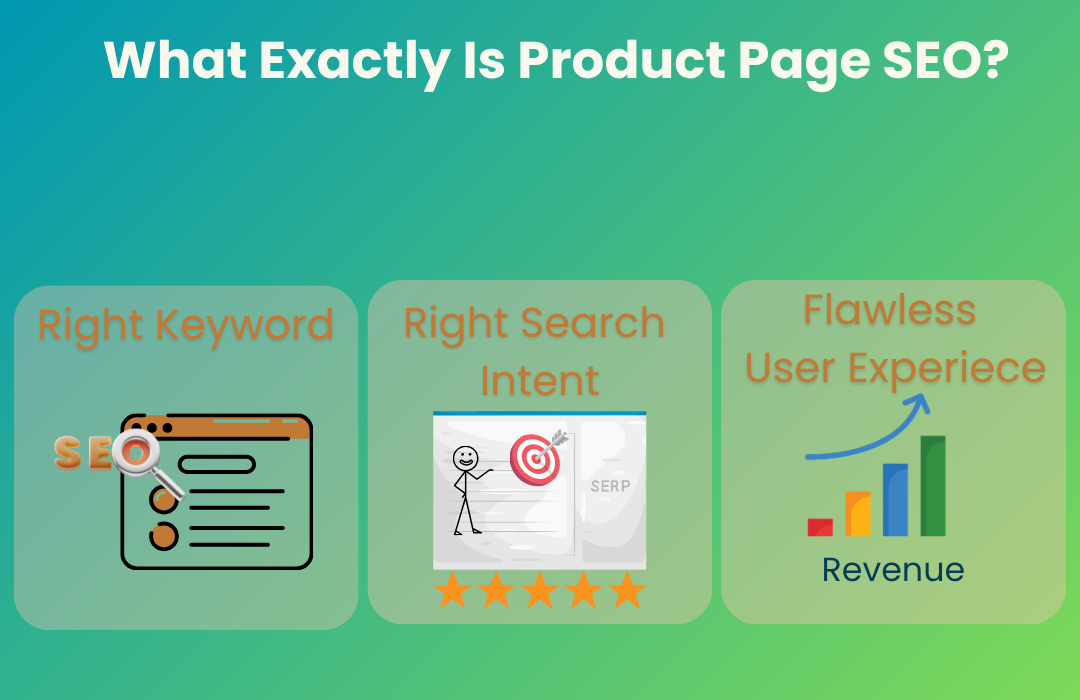
Most people think Product Page SEO just means stuffing keywords into a title to rank on Google. That is a highly outdated approach. The modern, pro-level definition of Search Engine Optimization (SEO) for eCommerce is:
Right Keyword + Right Search Intent + Flawless User Experience = Revenue
If you are only doing traditional SEO, you might get a few rankings. But if you combine technical SEO with Conversion Rate Optimization (CRO), you generate actual revenue. This dual approach is exactly what we implement at PG Digital Solution to build scalable e-commerce retail businesses.
Step 1: Start With Intent-Based Keyword Research
Basic keyword research is officially dead. Simply finding a high-volume keyword is no longer enough. To succeed, you must execute the best keyword research strategy for shopify products, which revolves entirely around “Search Intent Mapping.”
Let’s break down the psychology of a search query:
| Keyword Example | Search Intent | Where to Use It |
| what is an oversized t-shirt | Informational | Blog Post |
| oversized t-shirt men | Commercial | Collection Page |
| buy black oversized t-shirt men | Transactional | Product Page |
The Golden Rule: Product pages should only target transactional keywords.
Practical Execution: Before finalizing a keyword, search for it on Google. (We highly recommend using authoritative tools like Ahrefs Keyword Explorer for data accuracy). Look at the top 5 results. Are they blog posts, category pages, or specific product pages? If Google is ranking product pages for that keyword, it is safe to use.
For advanced keyword mapping and funnel setup, PG Digital Solution follows a rigid system where search intent and your sales funnel are perfectly aligned.
How to Write SEO Friendly Ecommerce Product Descriptions
This is arguably the most underestimated area in Shopify SEO. Common mistakes include copying manufacturer descriptions word-for-word, only listing technical features, and completely ignoring SEO best practices.
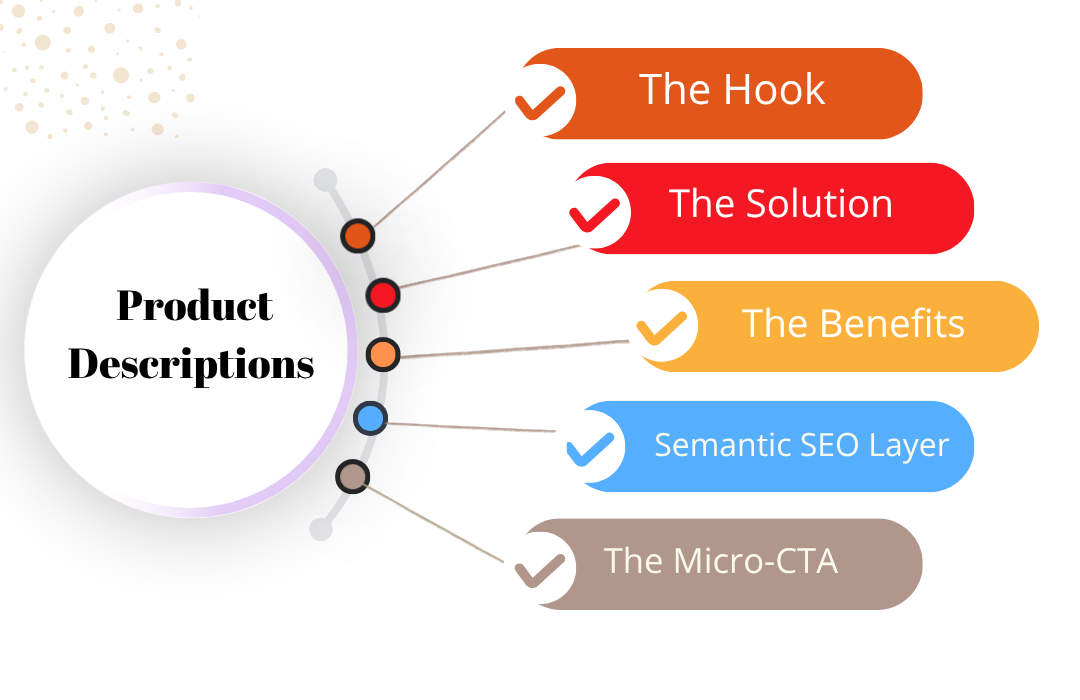
If you want to know how to write seo friendly ecommerce product descriptions that actually sell, use this advanced copywriting framework:
- The Hook (Highlight the Problem): “Do your regular t-shirts lose their shape and fade after just two washes?”
- The Solution (Product Intro): “This premium cotton black oversized t-shirt is engineered for maximum durability and all-day comfort.”
- The Benefits (Emotion + Logic): Highlight that it is sweat-absorbent, features long-lasting fabric, and offers the perfect streetwear fit.
- Semantic SEO Layer: Naturally weave in LSI (Latent Semantic Indexing) keyword variations like baggy t-shirt for men, loose fit cotton tee, and streetwear oversized shirt.
- The Micro-CTA (Call to Action): “Limited stock available in your size – order now.”
(Pro Tip: Writing compelling, rank-ready copy is an art. If your team is struggling, our specialized content writing services can handle this entirely).
6 Product Page SEO Best Practices
1. Title, URL, and Meta Description Optimization
Your title needs to appease both the Google algorithm and the human eye.
- Title Formula: Primary Keyword + Core Benefit (e.g., Black Oversized T-Shirt for Men | 100% Breathable Cotton)
- URL Structure: Keep it short and keyword-rich: /products/black-oversized-tshirt-men
- Meta Description: Use this to boost your Click-Through Rate (CTR). Formula: Problem + Benefit + CTA. (e.g., “Looking for stylish oversized t-shirts? Shop our premium, breathable cotton tees for men. Fast shipping. Order now.”)
2. Collection and Tags (Your Internal SEO Engine)
Collections act as the SEO backbone of your Shopify store architecture. Properly structuring your URLs (e.g., /collections/mens-wear leading to /collections/oversized-tshirts) drastically improves both internal linking and Google’s ability to crawl your site.
3. Flawless Image Optimization
Heavy images will destroy your loading speed, killing your conversions.
- Convert all product images to WebP format.
- Keep file sizes strictly under 150KB.
- Enable lazy loading.
- ALT Text Formula: Keyword + Visual Context (e.g., black oversized cotton t-shirt front view on model).
4. Implement Structured Data (Product Schema)
This is where amateurs fail and experts win. Structured Data (JSON-LD) tells Google exactly what your page is about, enabling those beautiful “Rich Snippets” (showing price and star ratings directly in search results).
According to official Google Search Central documentation, injecting accurate Product Schema is critical. Advanced stores use a hybrid approach of manual Liquid coding and apps. This high-level technical implementation is routinely handled by our Shopify development experts.
5. Leverage User-Generated Content (UGC)
Include verified reviews, star ratings, and customer photos. User-generated content not only acts as a massive conversion multiplier by building trust, but it also constantly refreshes the page with new, relevant keyword variations that customers naturally use.
Advanced SEO Insights & Real Case Study

At an expert level, Core Web Vitals heavily dictate both your ranking and your conversion rate. Loading speed, layout stability, and interaction responsiveness are absolutely critical. Shopify has certain limitations, such as restricted URL control and Liquid constraints, which require highly strategic handling.
A Real Case Study from PG Digital Solution:
- The Before: A client’s product title was generic, zero SEO descriptions, and no structured data or reviews.
- The Fix: We completely overhauled the page. We optimized the title, injected a structured description using our framework, added manual JSON-LD schema, and integrated customer reviews.
- The Results: Click-Through Rate (CTR) increased by 32%, overall conversion increased by 18%, and the primary keyword jumped from Page 3 to Page 1 of Google.
This exact level of data-driven execution is what we deliver across all our e-commerce solutions.
Top Shopify SEO Apps to Assist Your Strategy
While apps do not replace a solid strategy, they make execution significantly easier:
- TinyIMG: The best tool for bulk image optimization and WebP conversion.
- SearchPie: Excellent for speed optimization and technical SEO audits.
- SEOAnt: Great for AI-driven optimizations and fixing broken links.
- Booster SEO: A solid, user-friendly choice for absolute beginners.
Frequently Asked Questions
1. What is the most important factor in Shopify product page SEO?
The most important factor is the seamless combination of search intent, content structure, and page experience. Even with the perfect keyword, slow loading speeds or weak content will prevent sustainable rankings. Your page must work together as a complete system.
2. Can SEO actually generate direct sales for a Shopify store?
Absolutely. SEO provides the highest ROI of any marketing channel over the long term. Ranking for “transactional keywords” brings in highly targeted users with their credit cards ready.
3. How long does Shopify SEO take to show real results?
Typically, you can expect to see movement within 30 to 90 days, depending on your niche’s competition and the quality of your implementation. Consistency and technical accuracy are key.
4. Can I just install a Shopify app to handle all my SEO?
No. Apps are merely tools that assist with execution; they do not replace a customized strategy. Real SEO requires a deep understanding of keyword intent, content architecture, and technical backend elements.
Conclusion: Stop Guessing, Start Scaling
If you are just uploading products, pasting the manufacturer’s description, and expecting magical SEO results, you are not running an eCommerce store—you are just running a digital catalog.
In today’s hyper-competitive online environment, simply ranking on page one is not enough. You must understand how to optimize shopify product pages for seo in a way that effortlessly guides users from a Google search straight to the checkout page. Successful brands do not rely on guesswork; they rely on data-driven optimization, accurate intent mapping, and conversion-focused page design.
If your store is getting traffic but struggling to convert, or if you are simply unsure where your technical leaks are, it is time to stop making random, hopeful changes. It is time to build a proper, scalable system.
This is exactly where PG Digital Solution steps in. We specialize in turning broken Shopify funnels into predictable revenue engines.
Stop guessing. Start scaling. Contact PG Digital Solution today and let’s optimize your store for maximum profitability.