The Ultimate Guide to Ecommerce Email Marketing Flows to Recover Abandoned Carts
 Updated: Apr 20, 2026 ⏱ 8 Min Read
Most ecommerce brand owners operate under a massive misconception: they assume their biggest problem is traffic. They obsess over running more ads and getting more clicks. But in reality, if your Shopify store is getting traffic but no sales, a staggering percentage of your revenue is leaking out right at the finish line—after users add products to their cart and simply leave.
💡 Key Takeaways
- H2: What Are Abandoned Cart Email Flows?
- Why Do Customers Actually Abandon Carts?
- The Complete Flow Structure (With Logic)
- How to Write High Converting Abandoned Cart Emails
Think about the psychology of this action. These customers have already shown high intent. They liked the product, selected their size or variant, and clicked “Add to Cart.” They just didn’t complete the final purchase.
Need a High-Converting Strategy?
Our expert developers at PG Digital build systems that sell.
That specific gap is exactly where ecommerce email marketing flows to recover abandoned carts become absolutely critical. It is not just about sending a generic, desperate reminder. It is about building a highly structured, automated recovery system for your e-commerce retail business that converts high-intent users into paying, loyal customers.
H2: What Are Abandoned Cart Email Flows?
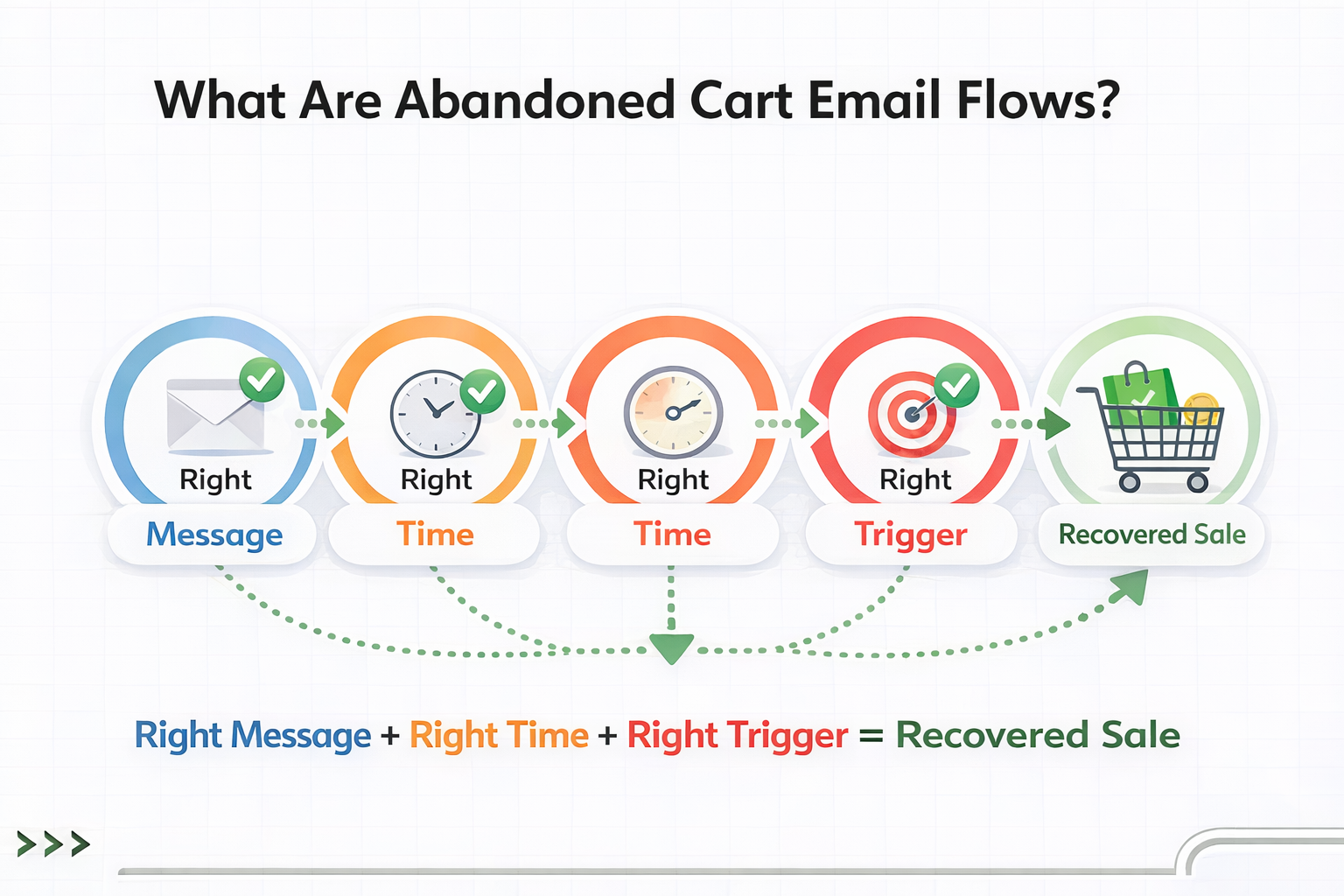
When a user adds a product to their shopping cart, enters their email at checkout, but does not complete the payment, an automated sequence of emails is triggered to bring them back.
The core idea behind this system is simple but powerful: Right Message + Right Time + Right Trigger = Recovered Sale.
This should never be a single, standalone email. A pro-level abandoned cart flow is a sequence-based system designed entirely around user behavior and buying psychology.
Why Do Customers Actually Abandon Carts?
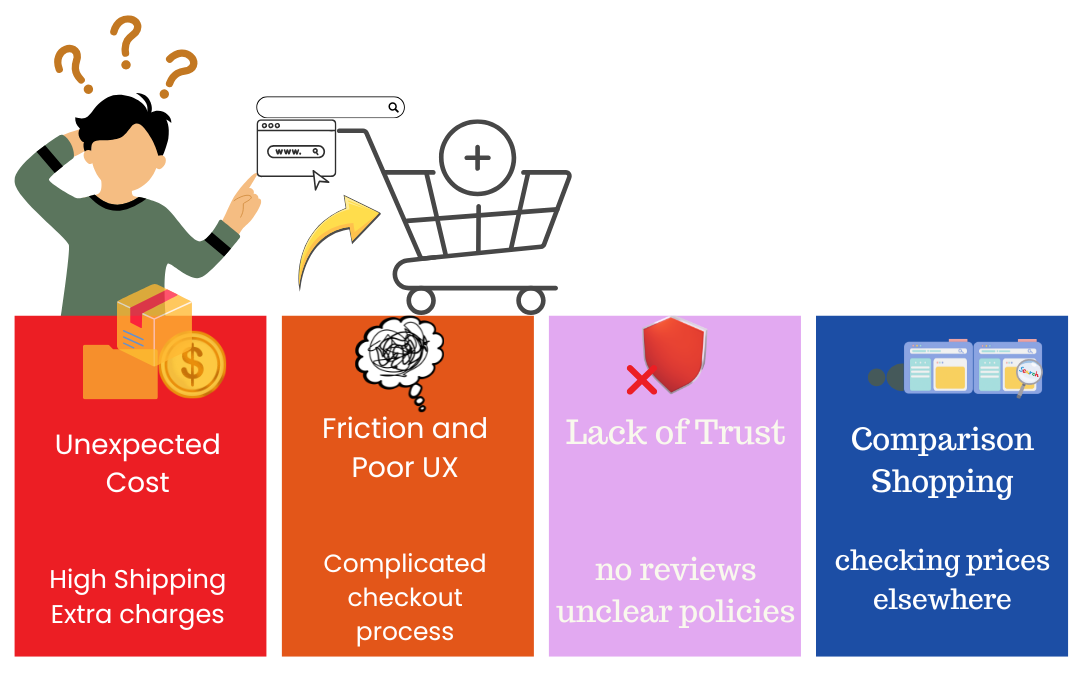
Before you can build a system to fix cart abandonment, you need to deeply understand the root cause. According to global ecommerce research, the average cart abandonment rate is nearly 70%. If you do not know why they are leaving, your emails will not convert them.
The most common reasons for cart abandonment include:
- Unexpected Costs: High shipping fees or unexpected taxes revealed at the very last step.
- Friction & Poor UX: A slow, glitchy, or overly complicated checkout process. (This is why investing in solid UI/UX design is crucial).
- Lack of Trust: No security badges, missing customer reviews, or unclear return policies.
- Comparison Shopping: The user got distracted or wanted to check prices on another website.
A strong abandoned cart email flow doesn’t just say “come back.” It directly addresses and neutralizes these objections inside the emails themselves.
The Complete Flow Structure (With Logic)
Sending emails at random times will only annoy your customers. A highly optimized, standard 3-step abandoned cart flow looks like this:
| Email Sequence | Optimal Timing | Primary Objective | Psychological Trigger |
| Email 1 | 1 to 2 hours | Gentle Reminder | Memory Recall |
| Email 2 | 12 to 24 hours | Build Trust & Desire | Value Proposition & FOMO |
| Email 3 | 24 to 48 hours | Push for Conversion | Strong Incentive (Discount) |
The Flow Logic:
- Email 1: “Hey, you forgot something great in your cart.” (No pressure, purely helpful).
- Email 2: “Here is why this product is worth buying.” (Highlight reviews and product benefits).
- Email 3: “Take action right now.” (Offer a 10% discount or free shipping before the cart expires).
This exact, structured email marketing flow is what reliably converts abandoned carts into bottom-line revenue.
How to Write High Converting Abandoned Cart Emails
Most brands fail at recovery because their emails feel generic, robotic, and uninspiring. High-converting emails do not rely on random creativity; they require pro-level content writing and proven copywriting frameworks.
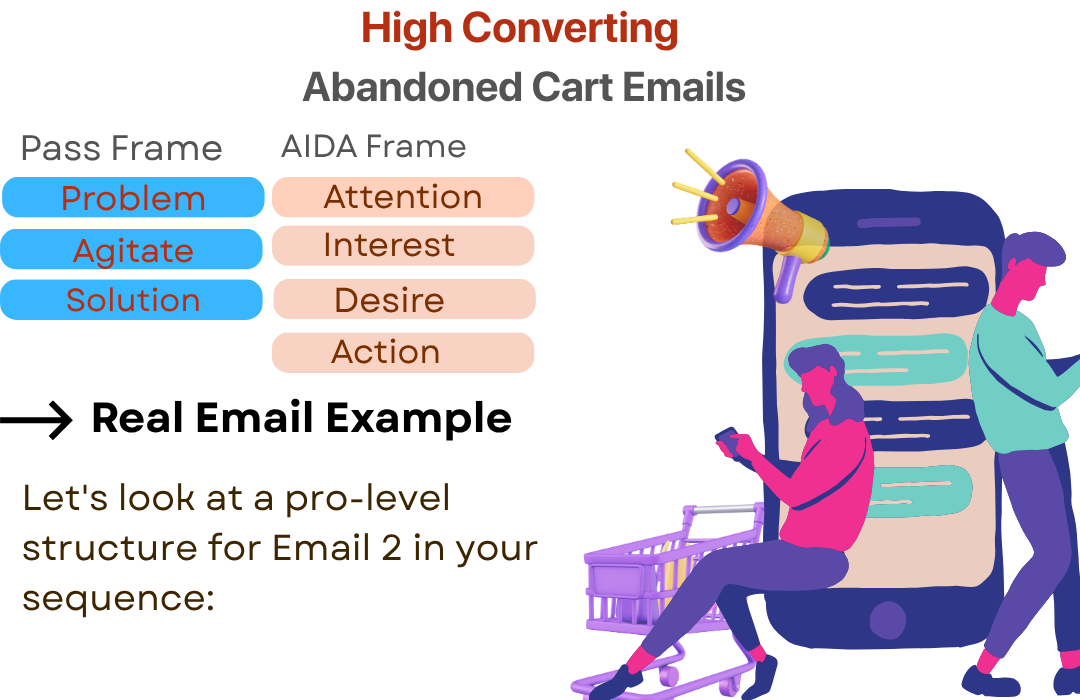
If you want to know how to write high converting abandoned cart emails, apply these two legendary frameworks:
1. The PAS Framework (Problem → Agitate → Solution)
- Problem: “Still unsure about your purchase?”
- Agitate: “This specific item is trending, and our stock is running out incredibly fast.”
- Solution: “Complete your order now and secure your item before it’s gone.”
2. The AIDA Framework
- Attention: A punchy subject line to guarantee an open.
- Interest: Highlighting the core benefit of the exact product they left behind.
- Desire: Injecting social proof, customer reviews, or creating scarcity.
- Action: A bold, impossible-to-miss Call-To-Action (CTA) button.
Real Email Example (A Full Breakdown)
Let’s look at a pro-level structure for Email 2 in your sequence:
Subject: Still thinking it over?
Preview Text: Your cart is waiting — don’t miss out!
Hi Rahul,
You left something great in your cart, and we didn’t want you to miss out.
Here’s what you selected:
[Dynamic Image of Black Oversized T-Shirt]
- Premium cotton, highly breathable fabric
- Designed for all-day comfort
Customers absolutely love this piece for its fit and durability, and it is quickly becoming one of our all-time bestsellers.
Stock is highly limited, and items left in your cart are not reserved.
Click below to complete your order before your size is gone for good.
[BUTTON: Complete Your Purchase Securely]
Still unsure? Here’s what other customers are saying:
“Perfect fit and amazing quality. Totally worth the price.” – Verified Buyer
You are just one step away from upgrading your wardrobe.
Real Metrics & Benchmarks That Matter
Stop guessing your performance. Here is the data you need to aim for to ensure your system is actually working:
- Open Rate: Average is 35–45%. An Optimized Flow hits 50%+. (Email 1 will always have your highest open rate).
- Click-Through Rate (CTR): Average is 5–10%. An Optimized Flow hits 12–18%.
- Recovery Rate: Average is 3–8%. An Optimized Flow hits 10–20%. (Email 3 generally drives the highest conversion rate).
Best Email Marketing Software for Shopify
Choosing the right tool directly dictates how well you can execute this strategy. If you are comparing platforms, you might already know the importance of a solid foundation (like choosing between Shopify vs WordPress for Indian E-commerce). The best email marketing software for shopify relies heavily on the size and goals of your brand:
- Klaviyo: The absolute gold standard for scaling brands. It offers unmatched, advanced automation, deep behavioral segmentation, and dynamic product blocks.
- Omnisend: A fantastic option if you want to seamlessly integrate multi-channel marketing (combining Email and SMS in the exact same flow).
- Shopify Email: The best choice for absolute beginners. It is native to Shopify, incredibly easy to use, and highly cost-effective for new stores just getting off the ground.
Implementation Details: The Step-by-Step Shopify Execution

Many blogs stay vague on execution. As Shopify development experts, we believe in transparent, actionable steps. Here is how you technically set up this system:
- Install Your Software: Connect your chosen tool (like Klaviyo) directly to your Shopify store.
- Enable the Trigger: Set the automation trigger to “Checkout Started” but add a filter: “Has not Placed Order since starting this flow.”
- Set the Delays: Program your specific time delays (e.g., 2 hours, 18 hours, 36 hours).
- Add Dynamic Blocks: Ensure your email pulls the exact product image, variant, and price dynamically from Shopify.
- Advanced Layering (Optional): Once your email flow is strong, layer in an SMS reminder immediately after Email 2, or a WhatsApp follow-up for maximum visibility.
Case Study: Turning Lost Carts into Immediate Profit
The Scenario: A mid-sized Shopify clothing brand came to us. They were losing nearly 70% of their carts.
The “Before”: They had zero email flows set up. No follow-ups meant they were suffering from a massive revenue leakage every single day.
The Implementation: Our performance marketing team built a highly customized, 3-step abandoned cart email sequence. We focused heavily on personalization, injected real customer reviews to build trust, and utilized a scarcity angle. Crucially, we only offered a discount code in the very last email to protect their profit margins.
The “After” (30 Days Later):
- Open Rate: Skyrocketed to 52%
- CTR: Improved to 14%
- Recovery Rate: Hit a massive 17%
- Overall Revenue Increase: +22% without spending a single extra rupee on ads.
The Key Learning: Perfect timing and personalization will always outperform simply throwing cheap discounts at customers. A structured email flow system beats isolated, single reminder emails every time.
Frequently Asked Questions (FAQs)
1. How many emails should an abandoned cart flow have?
A 3-email sequence works best. It perfectly balances a gentle reminder, the building of urgency, and a final conversion push without overwhelming or spamming the user.
2. Should every email in the sequence include a discount?
Absolutely not. Discounts should be strictly reserved for the final email. Earlier emails should focus on demonstrating value, building brand trust, and creating urgency. Giving discounts too early trains your customers to abandon their carts on purpose.
3. How quickly should the first recovery email be sent?
Ideally within 1 to 2 hours of abandonment. You want to reach the user while their purchase intent is still fresh in their mind.
4. Does personalization actually improve results?
Yes. Including the user’s first name, the exact item they left behind, and tailoring the copy significantly improves engagement and conversion rates.
Conclusion: Stop Leaving Money on the Table
If your brand is not actively using ecommerce email marketing flows to recover abandoned carts, you are quite literally losing revenue that already belonged to you.
Remember, customers who add products to their cart are not cold traffic. They are highly motivated, high-intent buyers who just need the right follow-up message at the exact right time. A structured system equipped with proper timing, compelling messaging, and reliable automation can consistently recover these lost sales month after month.
Instead of relying on a single, boring reminder or treating email as an afterthought, building a complete abandoned cart recovery system turns missed opportunities into highly predictable revenue.
This level of execution is exactly where PG Digital Solution steps in. We help ecommerce brands build and implement data-driven e-commerce solutions and email flows that actually convert.
Contact PG Digital Solution today and let us help you turn your lost carts into guaranteed conversions. Stop guessing. Start scaling.